
A raffle, a plastic suitcase, and the start of a trading habit
the swatch raffleLong before Momentum Dubai existed, Tariq’s first real lesson in watches came from a Swatch he wasn’t even sure he’d get to buy.
see how it started
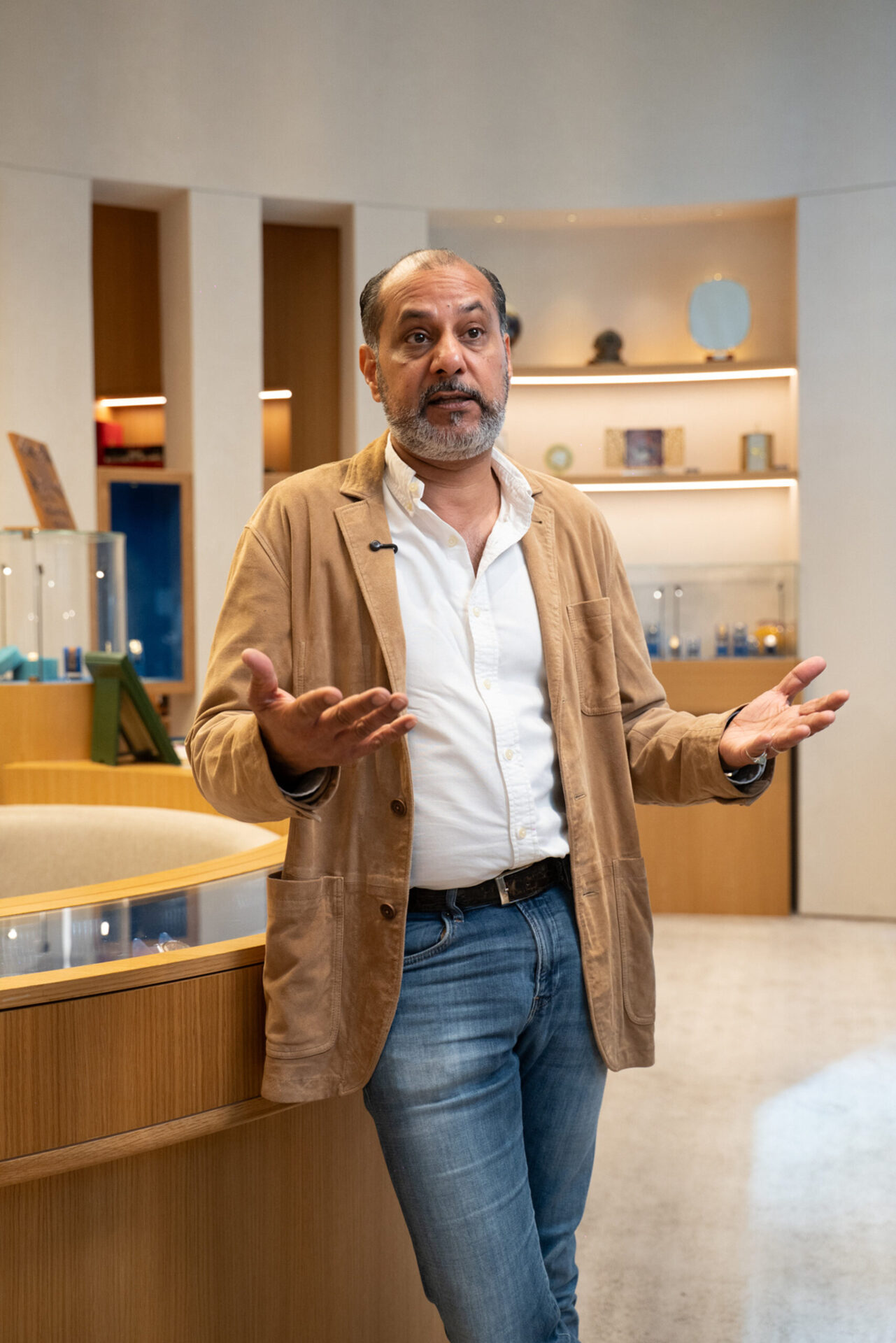
Tariq Malik, Co-Founder and Managing Partner of Momentum Dubai, has over 30 years in watch trading. He’s been into watches since he was 16, and even before that he had a Casio Calculator watch.
The real turning point was a Swatch. At the time, some Swatch models were rationed through a raffle: entrants had to win just for the chance to buy one at retail price – an authorization, not the watch. Tariq entered without expecting to win, and did. It felt almost unreal to him.
Winning taught him something more useful than the watch itself: that a watch could be worth more than what he’d paid for it. He started buying newspapers to track other sellers’ prices for the watch he won and took it to a Swatch fair, the so-called Grey market for Swatch watches. Hundreds of buyers and sellers in one room, stacks of cash exchanging hands – a completely new experience. He sold his watch for triple of what he had paid and decided to start trading Swatch watches. He tried to memorize what was selling and for how much in order to buy stock. The market was very analog – no internet, no whatsapp and no smart phones to take photos. The watches were sourced in person – from students in the school bus, random people in supermarkets or stores and even from his teachers at school. When a good amount of watches was in hand he decided to visit another show to sell them.
He couldn’t afford a table to display stock at those fairs, so he and his twin brother carried their watches around in a clear plexi glass briefcase instead, walking the floor to find buyers. They started coming home with three, five, sometimes ten times what they’d initially put in.
“At 16 you don’t collect, because you don’t have the money,” Tariq says. So instead of collecting, he started trading. That instinct came from home too.
“In my family, the whole family was trading business. We did import, export, this and that. Trading was always my thing. I always said I don’t want to have a job, I want to do trading.”
The store they never meant to buy
aachen, 4 yearsA shop in Tariq’s hometown that started out just selling his watches for him ended up teaching him and his brother the entire business.
See what happened next
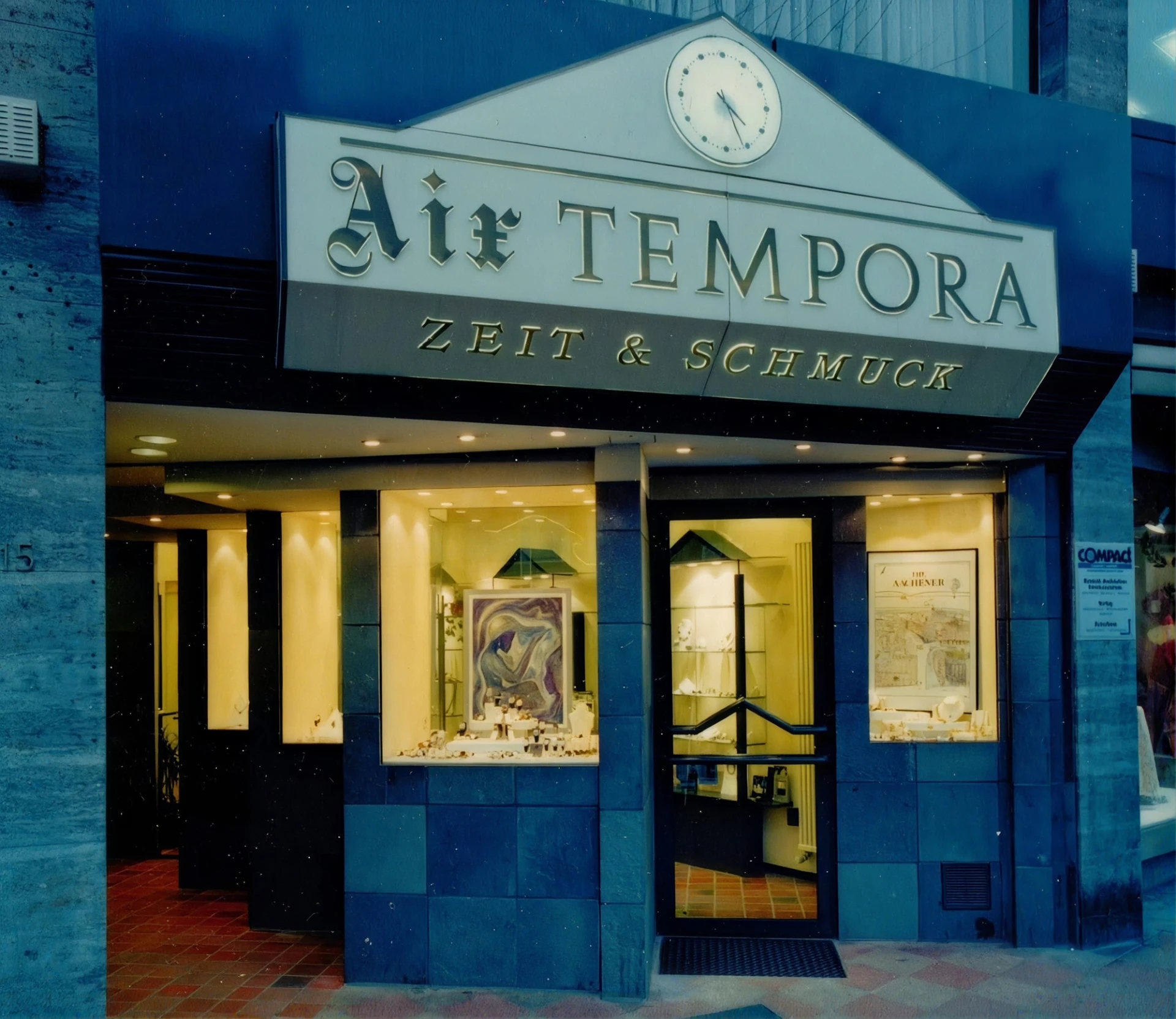
Aachen was Tariq and his brother’s hometown, and in the 1990s it’s where their trading turned into something closer to a real business. They found a local shop that sold collectibles and started placing the Swatches they’d been buying and reselling there on consignment, handing pieces over for the shop to sell on their behalf, then calling in every day to check what had moved.
Over time they started working in the shop itself, and picked up real sales experience doing it. When the owner decided to move on to a different project, he offered to sell the store to the two brothers.
It wasn’t something they’d planned for, and didn’t feel entirely realistic at the time. They bought it anyway, and ran it for four years, a stretch that gave them a lot of the knowledge that later went into building Momentum.
Key Insight
Before Momentum ever existed, Tariq and his brother had already run a full watch and collectibles retail business for four years, on the back of a consignment deal that started with a handful of Swatches.
Four founders, €180,000, and one DIFC address
4 foundersMomentum wasn’t built by one person, or with much of a cushion. It was four friends and everything they had at the time.
read the founding story
Tariq is one of four founding partners. Anas Halabi, a childhood friend and former neighbour of Tariq’s in Germany, moved to Dubai in 2005 and was working at Dubai Islamic Bank in DIFC. He later built his own real estate venture in London, and still works with Tariq on Momentum’s strategy and long-term goals.
Adam Roan, a wealth advisor at a major bank and a passionate collector himself, drawn to iconic designs and historic brands, was also based in DIFC. Dr. Hamid Haqparwar, another friend from Germany whom Tariq actually met in Dubai, rounds out the four.
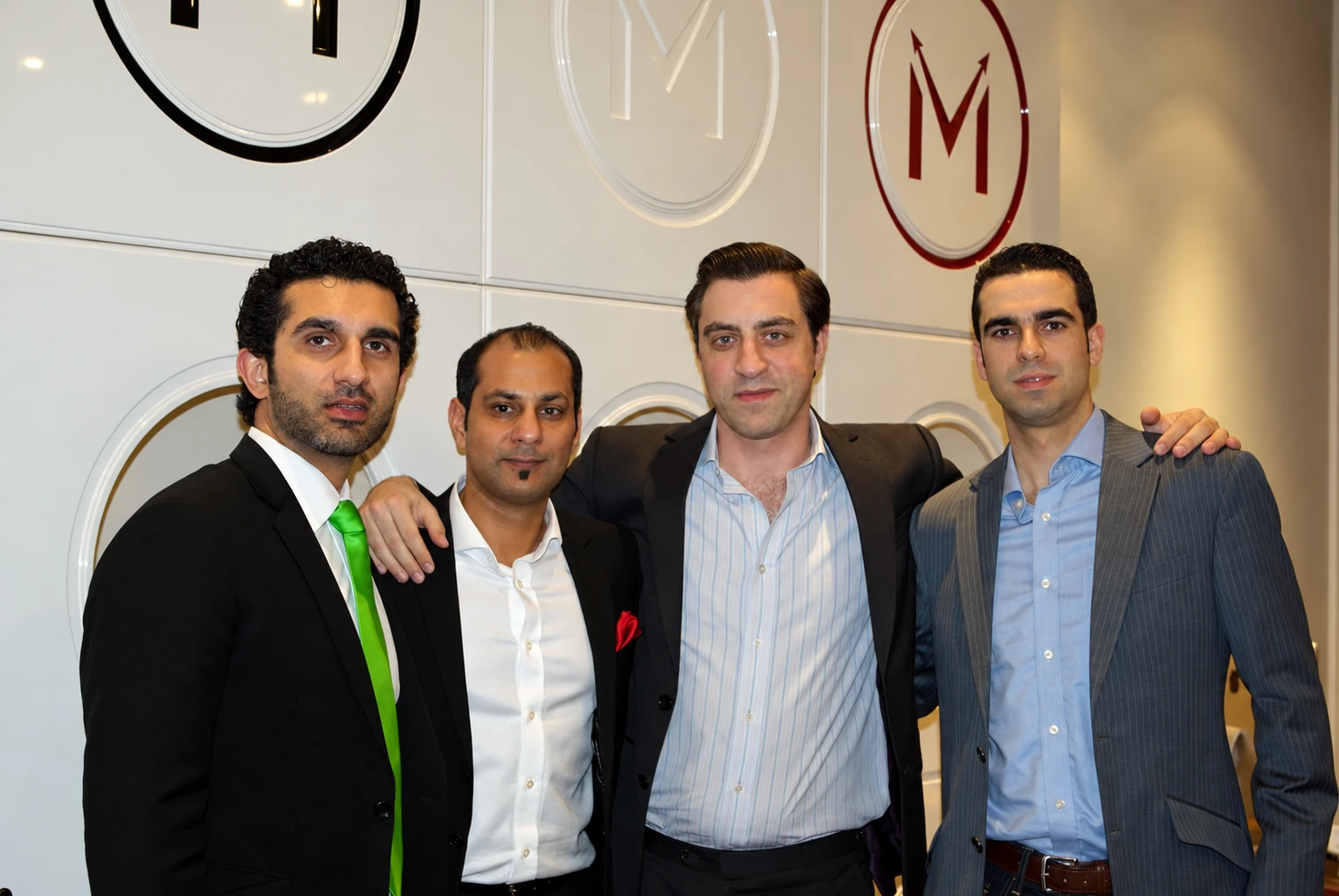
“Both of these were in DIFC when I came to Dubai. That’s why DIFC was the first address. They said it’s the best location.”
– Tariq
In 2011, the founders opened the DIFC shop with €180,000, everything they had between them at the time.
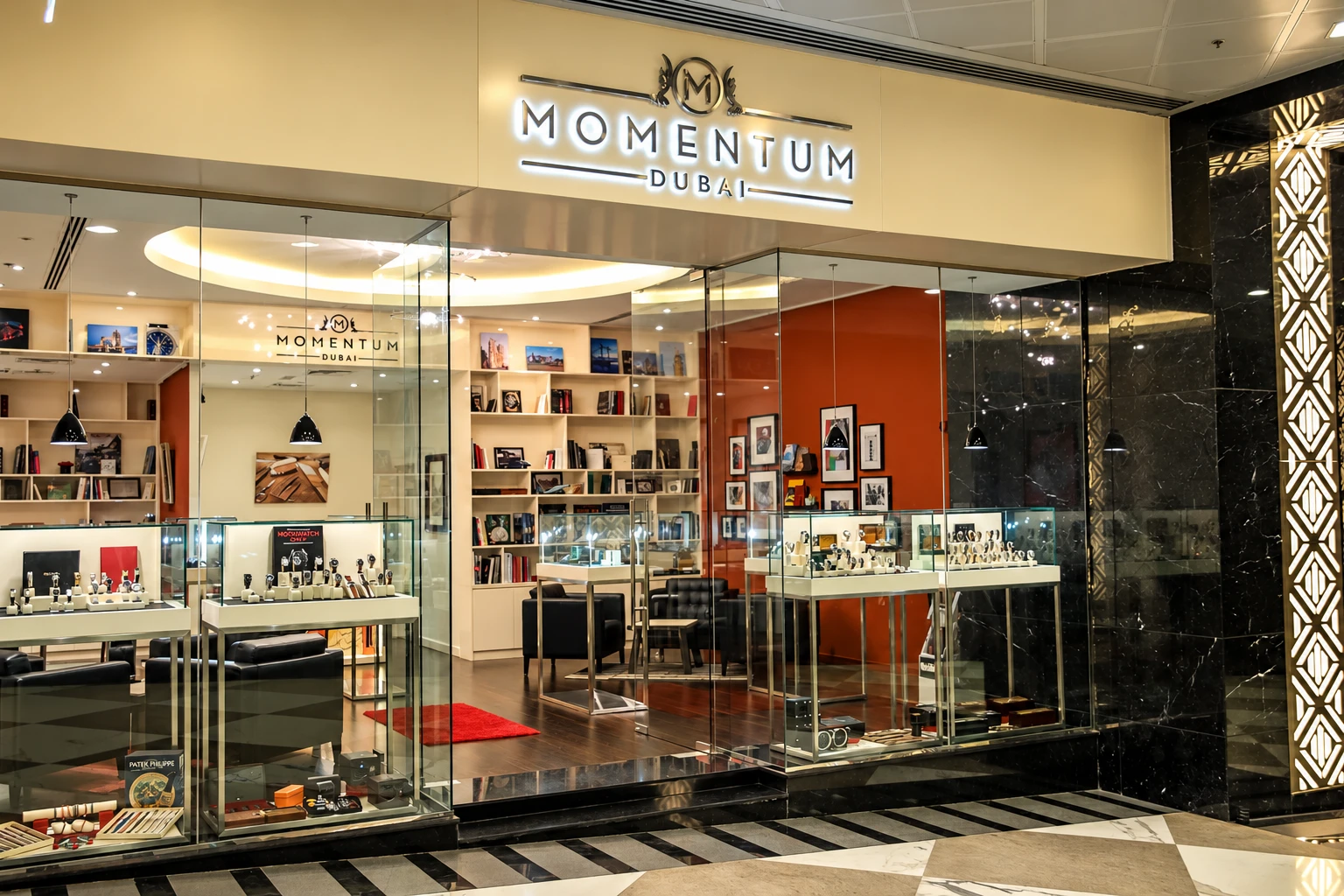
The first thing Momentum ever sold was a strap
first sale: a strapBefore Momentum sold a single watch, it solved a much smaller problem: nobody in Dubai sold a decent watch strap.
Discover the first sale
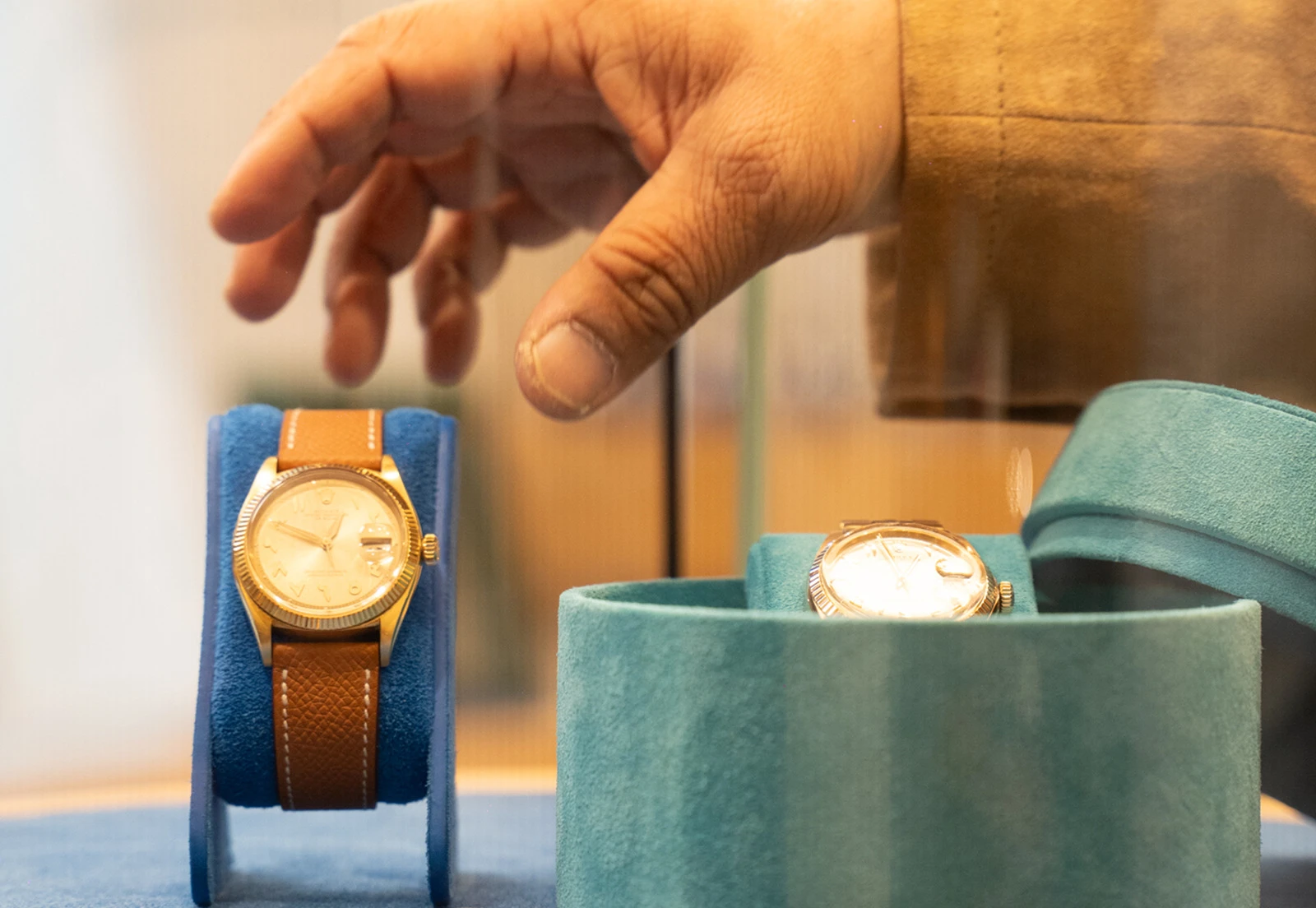
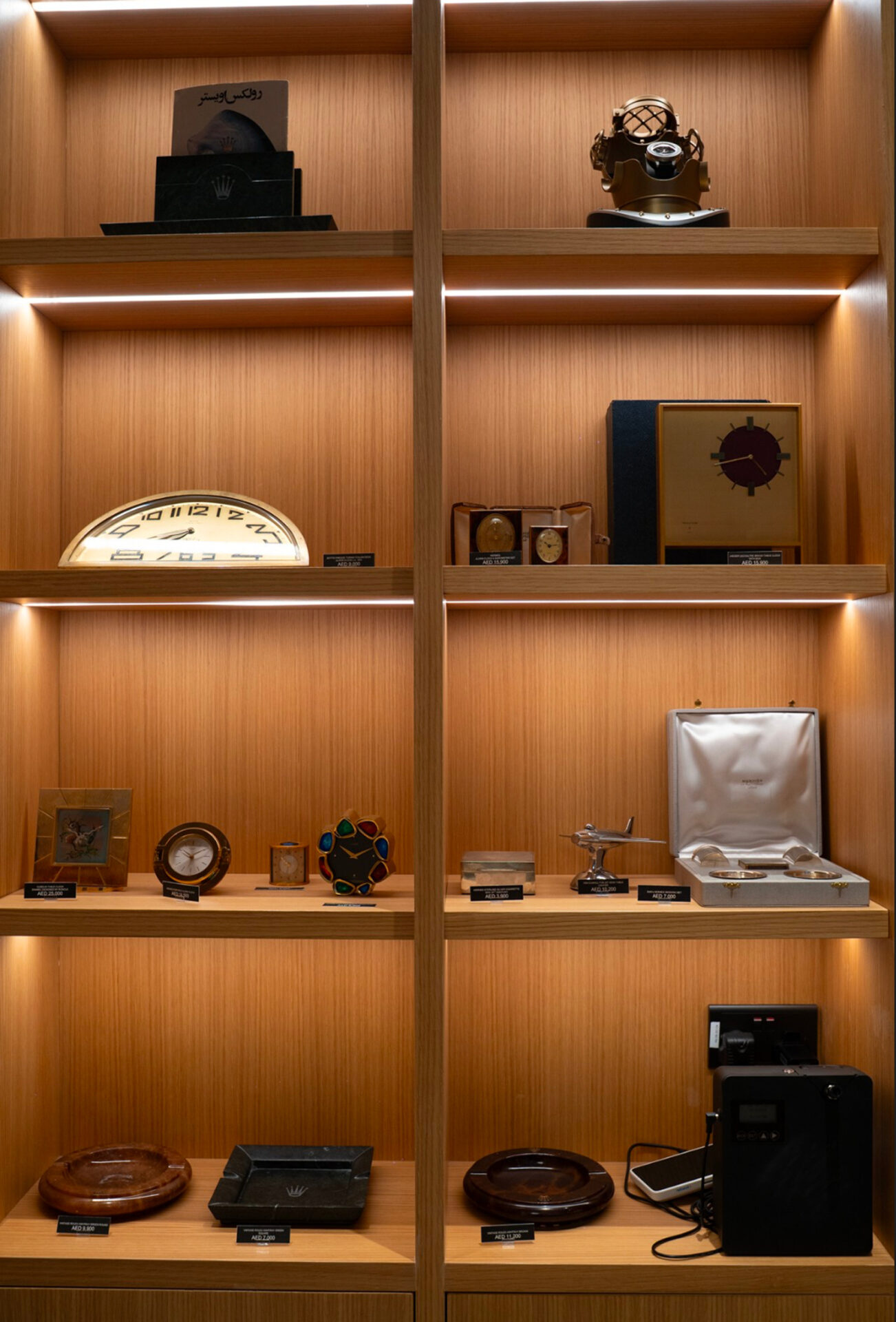
From day one, the shop was built as close to a one-stop shop as they could manage, with straps, boxes and watch winders alongside the watches themselves.
Before opening, Hamid, who Tariq describes as “a crazy marketing PhD,” ran a proper market study: walking the malls, mystery-shopping competitors, clocking kilometres over four weeks to see how much service the market actually offered around watches, not just sales.
The answer was: not much. Buying a decent watch strap in Dubai was genuinely difficult. Tariq had run a shop in Germany before and already had experience sourcing straps, so Momentum built that into a USP from day one.
“The first product we actually sold was a strap.”

Trust built without ever meeting the client
50% never metMomentum never planned to sell outside the UAE. Now most of its business happens with people abroad, and a lot of it happens with strangers.
see how trust was built
In the early years, sourcing was limited: some watch shows in Germany, and a local Dubai business model. “We never thought that we were going to sell watches internationally,” Tariq says.
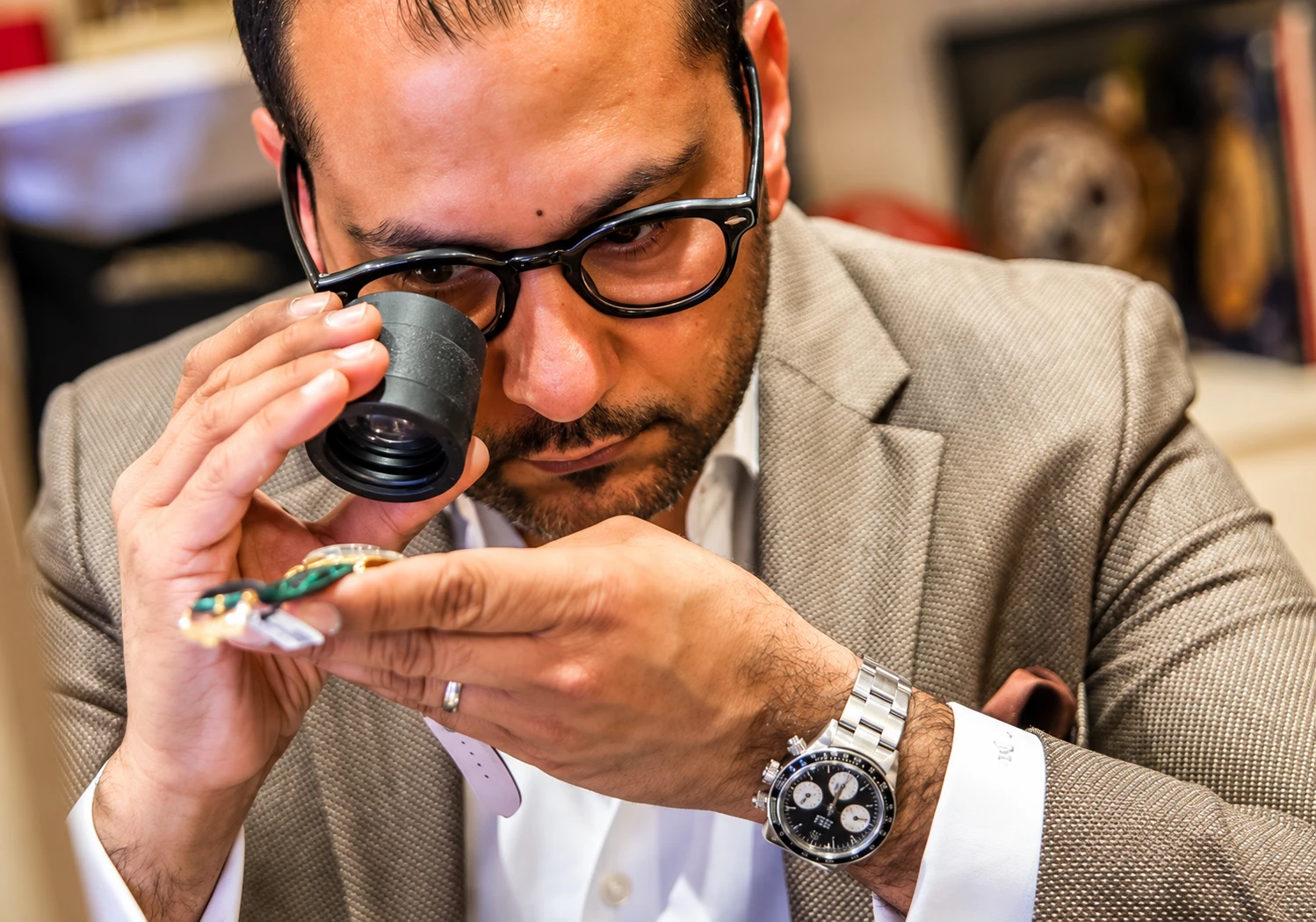
That changed in 2014, when he started travelling more for business: auctions, industry events, meeting specialists in different markets. Sourcing spread through that network. “The same way a client would come to us and buy the seller, not just the watch, we also buy the seller,” Tariq says. “There are certain specialists for certain things, and we’re happy to pay a bit more to get the same security we’d want a client to have from us.”
“There’s this trust in the industry, in certain sellers, that is really incredible. Some clients see a watch posted on Instagram and simply message to buy it. Some customers trust us so well that they just say, send me your bank details, I’ll wire you a quarter million dollars. I say, let me at least make you an invoice. They say, no, I don’t need one.”
On counterfeits, Tariq says Momentum is well past the point of being offered obvious fakes, though attempts still happen: fabricated backstories, photos of fake pieces sent cold. The bigger risk now is “clones,” watches copied to match the exact scratch, serial number or auction history of a specific, documented piece, built to pass off as that piece for resale. “The counterfeit side is getting better with time,” he says. “We always have to stay on the lookout.”
The economics of a vintage watch business
$5K to $500K+Momentum doesn’t disclose exact figures, but the shape of the business is clear: steady revenue growth, and a huge spread between an entry-level piece and a top one.
explore the economics
Asked for the one number he watches most closely, Tariq doesn’t hesitate. “It’s the revenue. It has grown steadily,” he says. Momentum just closed its best first half in company history, despite regional geopolitical tension.
Entry-level pieces at Momentum run around $5,000 to $7,000. The top end goes past half a million dollars.
Part of that is the nature of vintage versus modern watches, Tariq explains. With a modern watch, a buyer decides when to buy, where to buy, and how much to spend, and can usually find one somewhere. Vintage is different: a buyer might have the budget and the passion for a specific piece, but still spend two years hunting it down.
“The price isn’t always what stops you. It’s finding the watch at all.”
Key Insight
Momentum’s entry point starts around $5,000-$7,000, with top pieces trading beyond $500,000, a wide enough range that the business serves both first-time collectors and serious ones at once.
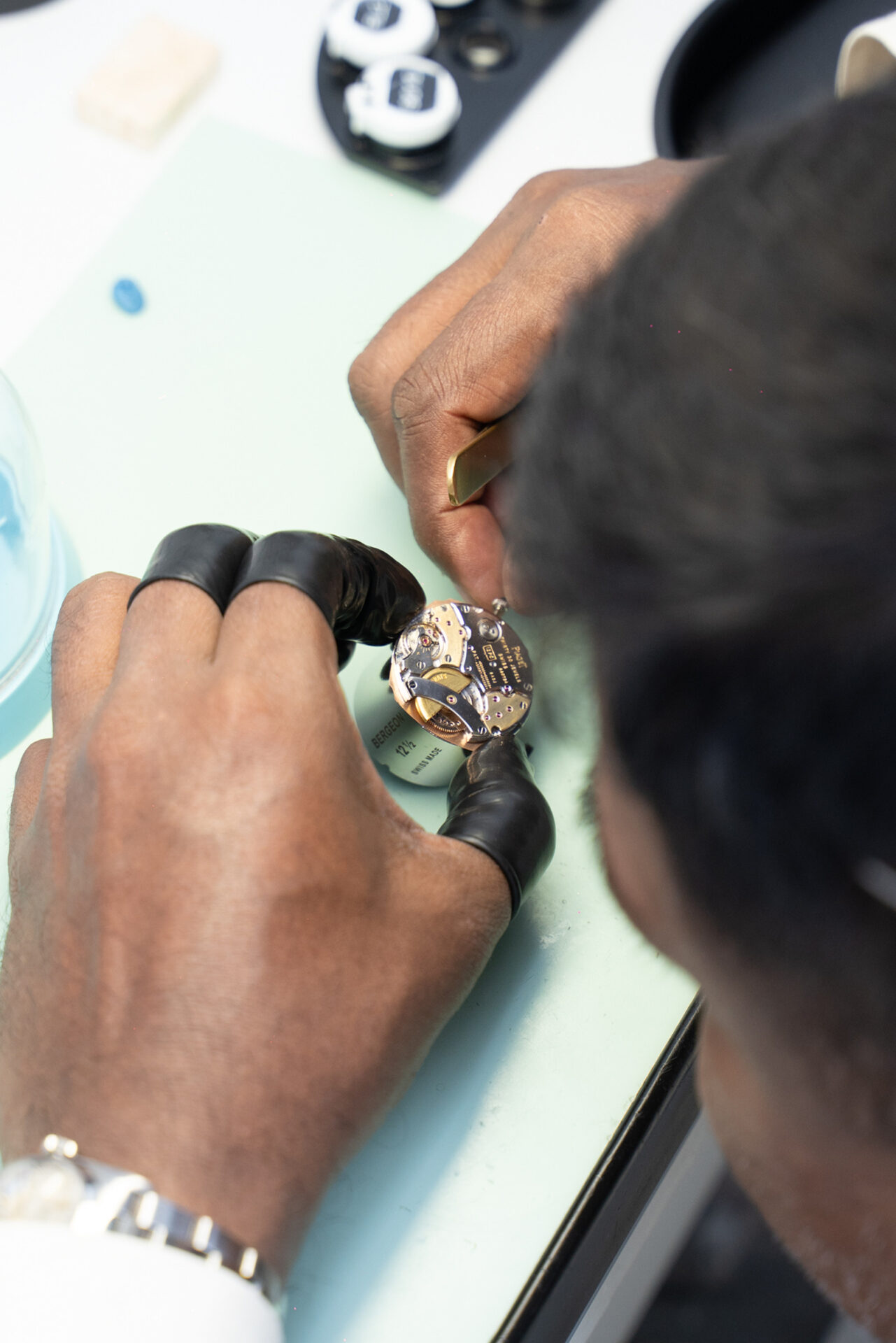
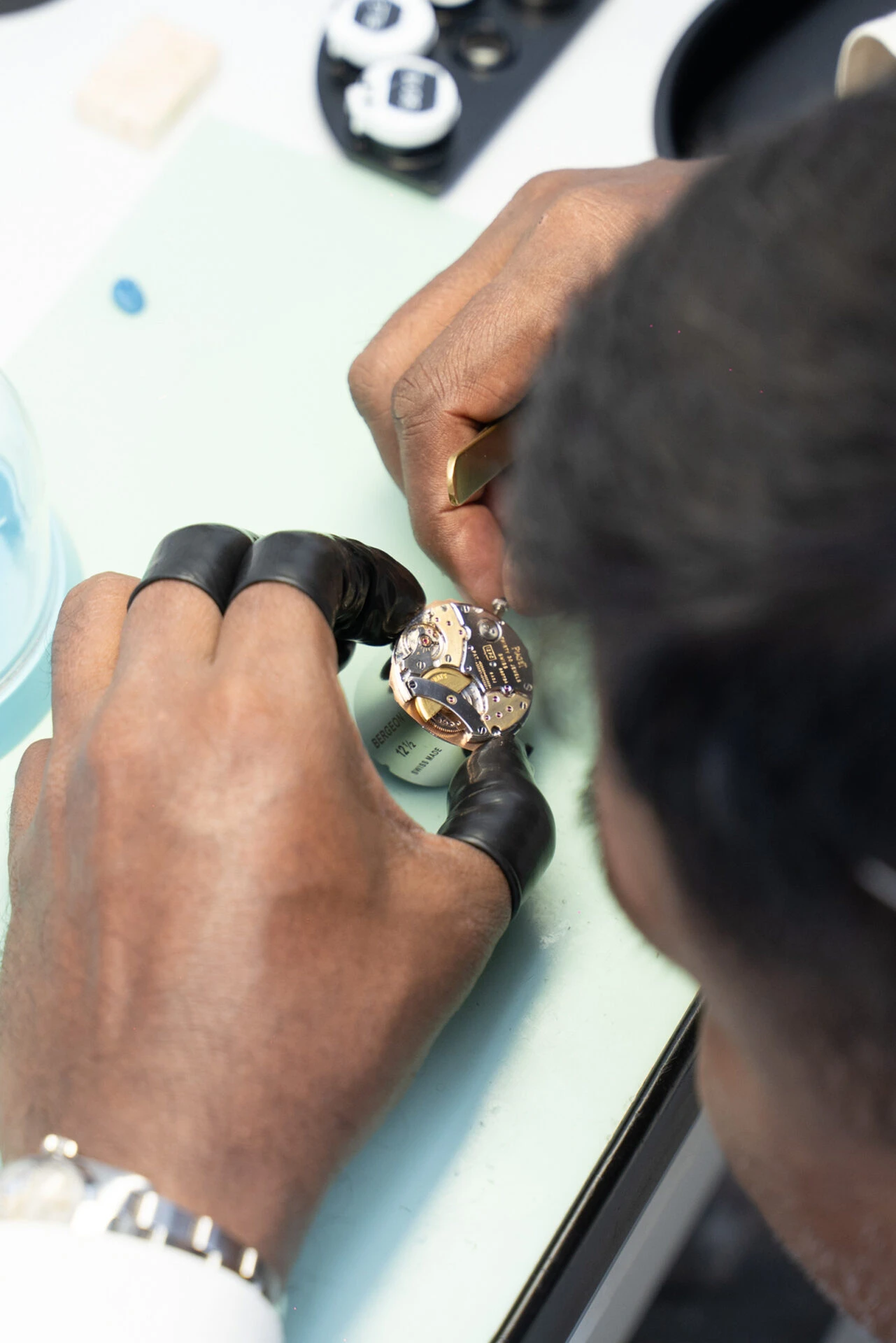
Typical clients are between 25 and 60 years old, Tariq says: mostly experienced collectors, alongside people just starting to collect. He’s deliberate about not treating Momentum as a pure sales operation for that second group. “Who you buy from is a big deal in this industry,” he says, which is part of why Momentum built out its own service center rather than sending vintage pieces back to the original brands for repair.
“We don’t want you to be helpless. If your watch has an issue and you go to the brand, they’ll often replace the original parts. The watch becomes more advanced technically, but you’ve destroyed its collectibility. Who wants to destroy value today?”
Betting on the watch nobody else wanted
day-date nicheAround 2016, Momentum picked a specific, unfashionable model to specialize in. It’s now one of the things the business is best known for.
Discover the day-date bet
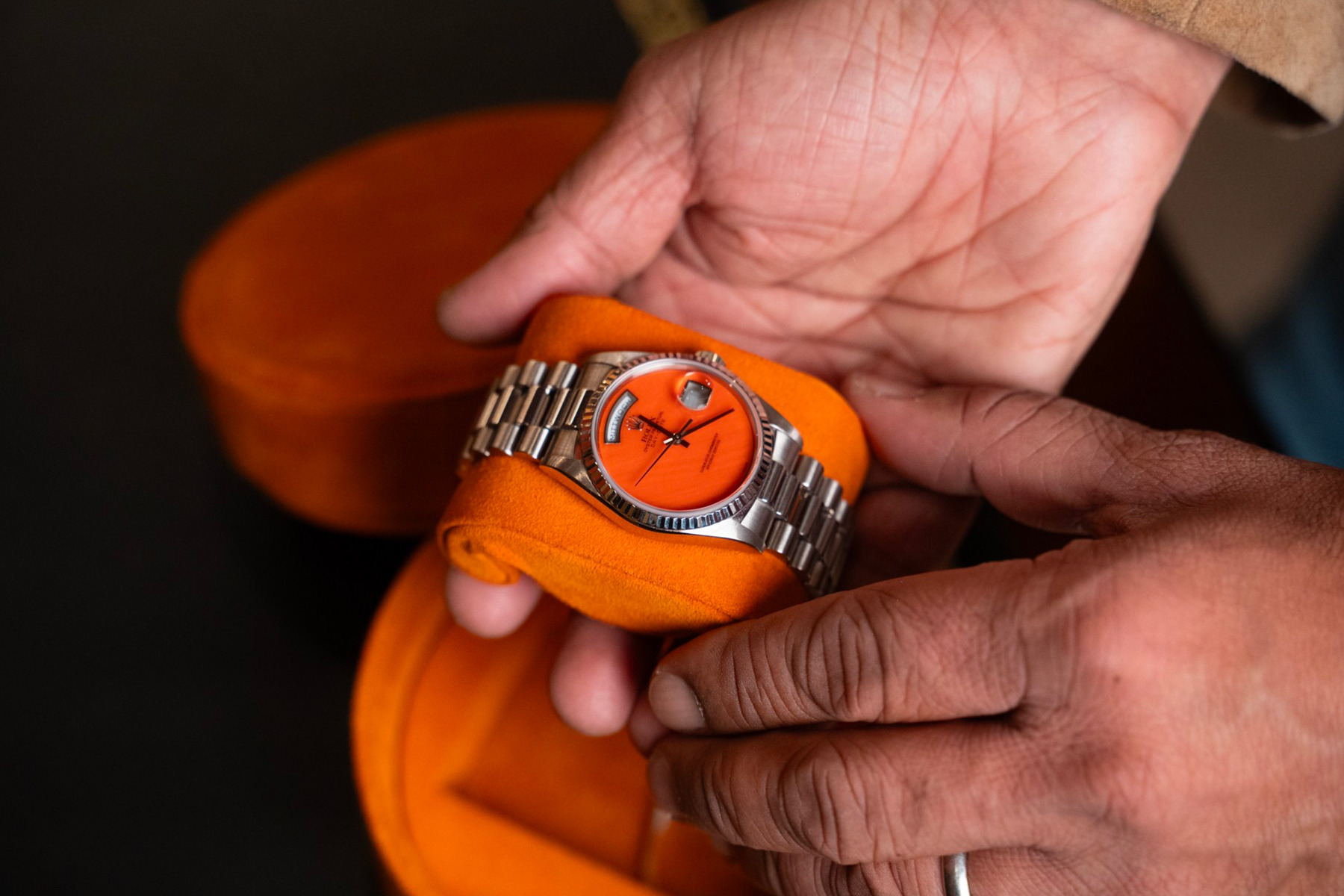
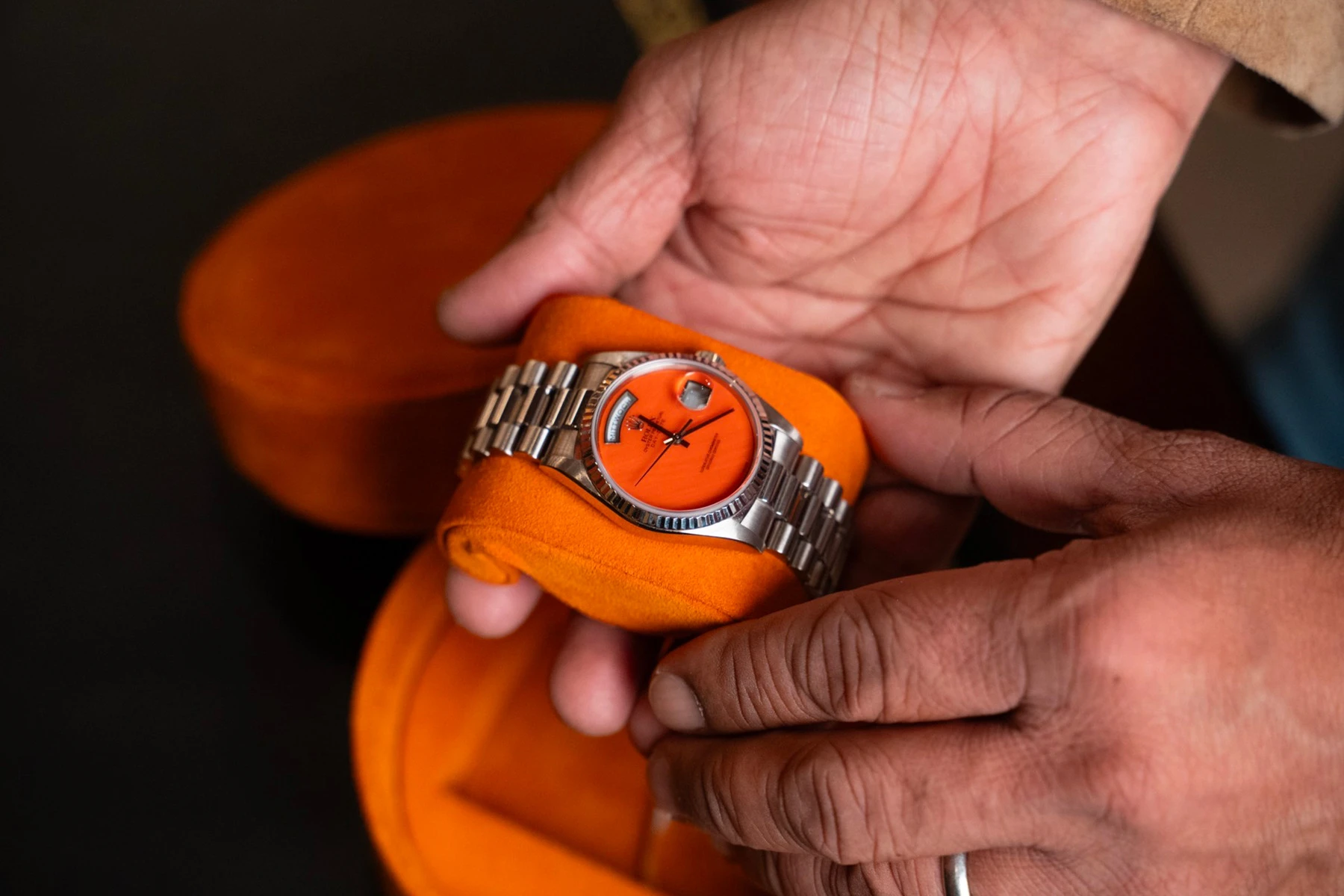
Momentum doesn’t deal in everything, Tariq says. Every watch is hand-picked, and around 2016 we made a deliberate call to focus on the Rolex Day-Date, a model he says the big dealers weren’t really highlighting at the time.
“For the longest time, the Day-Date was the old man’s gold watch,” Tariq says: full President bracelet, yellow or white gold, a watch with a stuffy reputation. Momentum was among the first to spotlight it as a serious vintage and collector’s piece.
“I believe we’ve evolved to be one of the top sellers, or names, for vintage collectible Day-Dates in the world today.”
From an aging DIFC shop to ICD Brookfield Place
40-50/dayMomentum spent 12 years in one DIFC building before moving to a newer one nearby. The new address trades some foot traffic for a better kind of visitor.
see why they moved
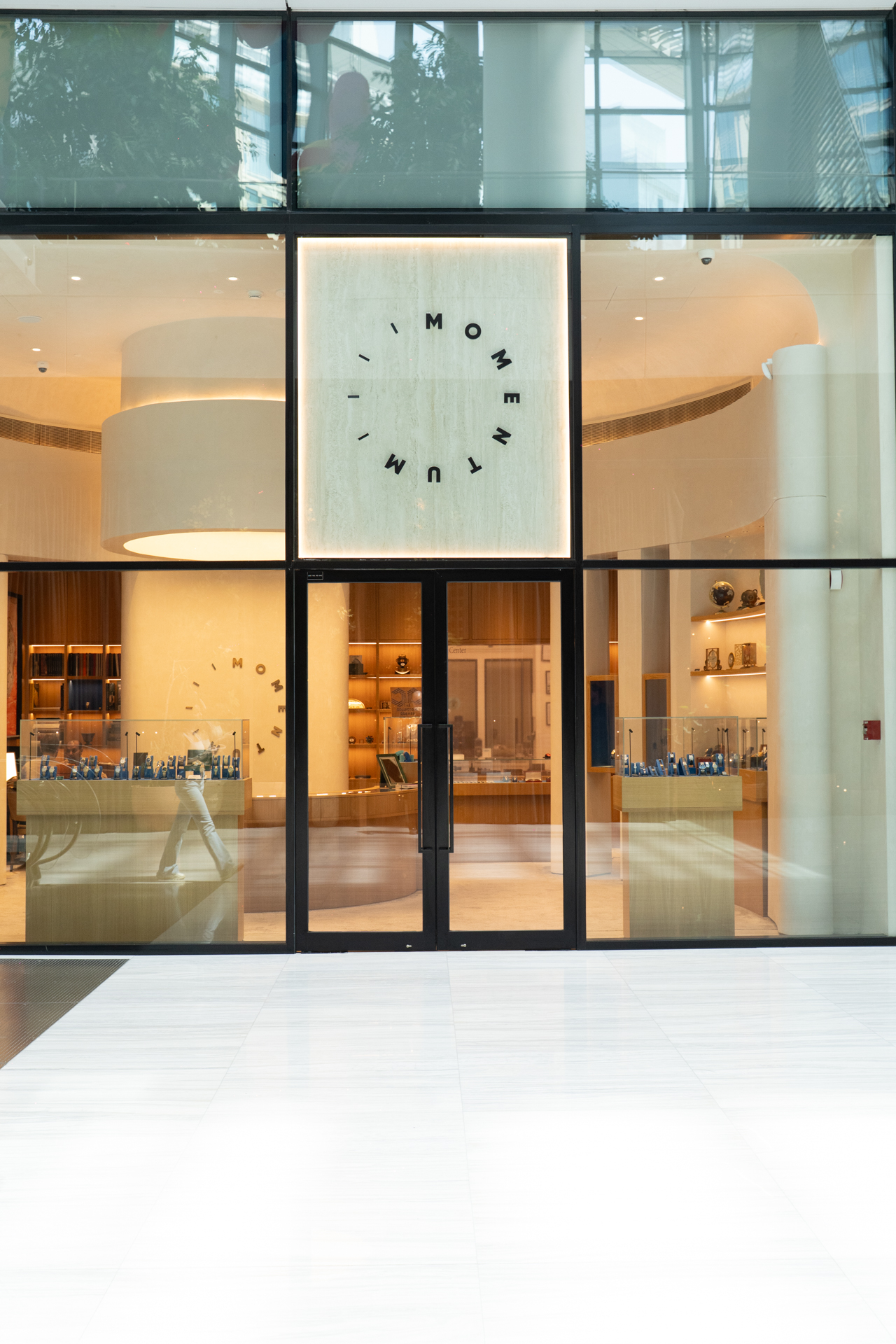
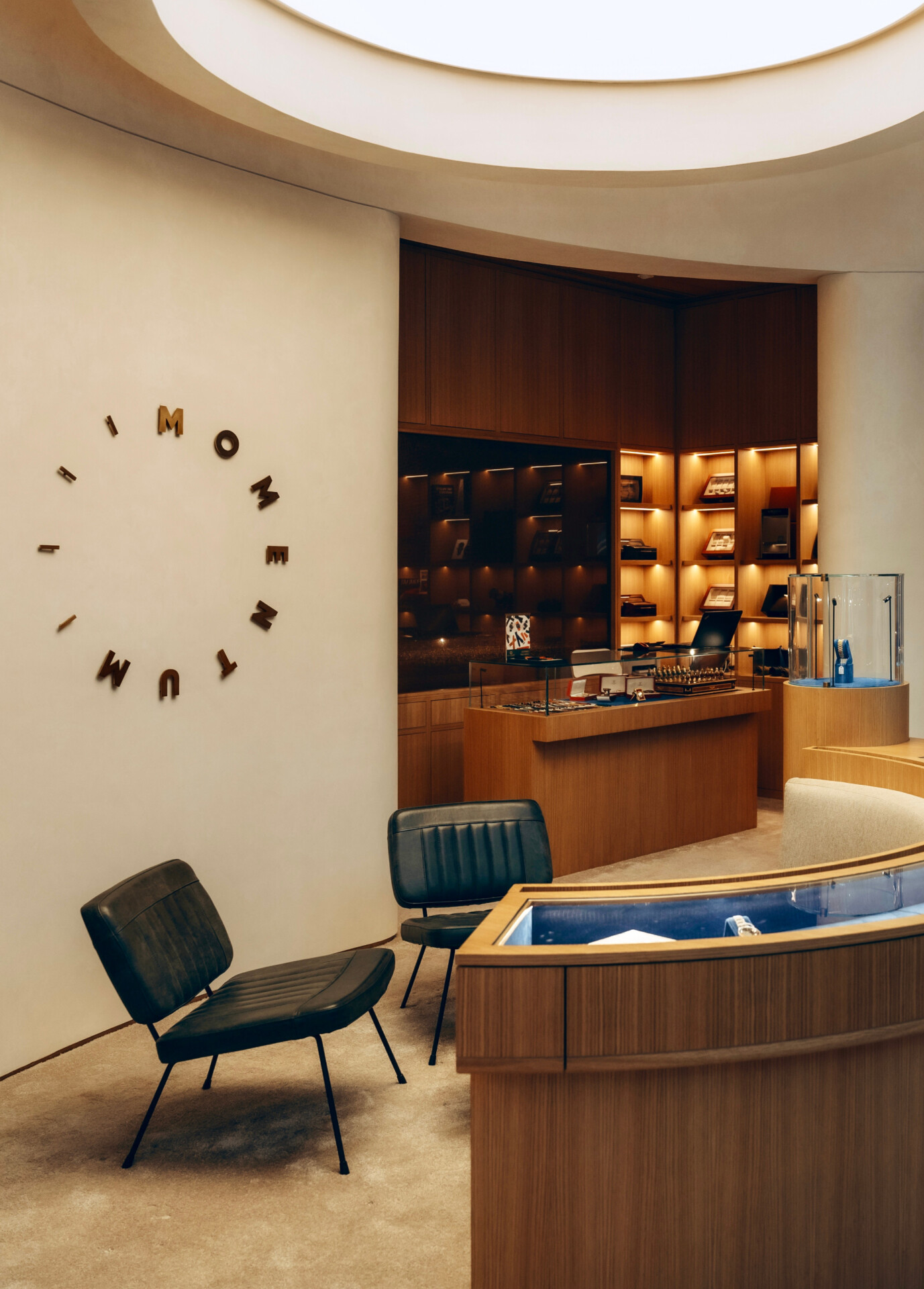
Momentum’s original shop was in DIFC for 12 years, through two renovations, before the team moved to ICD Brookfield Place, also within DIFC. Tariq describes the old building as having aged, and says the new one gave them daylight without being directly on the street.
The trade-off was foot traffic. The old location, in a busier commuting area, likely saw more people walk past. The new one sees fewer, but Tariq says the quality is higher: about 40 to 50 people walk into the shop per day, a mix of travellers and people in Dubai for business, in a building that also houses major luxury groups whose brands include Cartier. The DIFC is the Financial District of Dubai so Major Banks, Family Offices, Oil & Gas and the largest Consulting businesses are home over here.
Momentum still operates a single store. Tariq puts that down to cost, but mostly to hiring. “Our ideal salesperson is a watch collector,” he says. “How do you pay a watch collector enough to work for you?” It’s not impossible, though: Momentum’s senior sales executive, Mohammad Askeri, joined with general watch sales experience (12 years in luxury watches) and was trained into vintage on the job. In under five years at Momentum, Tariq says, Mohammad has become one of the most knowledgeable vintage watch specialists in the country, after Tariq himself.
The team today includes Tariq as the only full-time founder, Hussein Shaikh as Technical Manager overseeing watchmaking and horology, Qamarina McCann as Marketing Manager, Zia Ur Rehman handling administration and PRO duties including deliveries and client logistics, Gretchen Avendaño as Administration Executive managing inventory and operations, and Mohammad Askeri on sales.
On Chrono24, the largest watch marketplace in the world, Tariq is clear that Momentum isn’t really competing there. “It’s not one dealer, it’s a marketplace,” he says, one flooded with modern listings where a single rare modern watch can turn up hundreds of times. Momentum keeps a listing there mostly for visibility. Serious collectors, he says, want to deal directly with a seller they trust, which a marketplace can’t really offer. Most of Momentum’s own traffic comes through Instagram, supported by its Shopify website and some spend on Google and Meta ads – most importantly through his personal network.

What’s next: Saudi, Qatar, and staying friends with the competition
next: KSA&QatarMomentum isn’t planning a second store. It’s looking at partnerships instead, starting with two markets that have been asking for one.
what comes next
Tariq says the plan is to keep doing what Momentum already does, just better, and grow its reach. Rather than opening a second full store, the team is exploring partnerships in other countries, particularly Saudi Arabia and Qatar, where interest has been strong since a Momentum roadshow through the Middle East two years ago.
The US remains Momentum’s most important market by far. Most of its clients are American, concentrated around New York and Miami, which is why Momentum exhibits at two US shows a year: one in November, and the Original Miami Beach Antique Show each March, where the team is now in its third year as an exhibitor.
Despite international competitors, Tariq describes the vintage watch trade as unusually collegial. “At the end of the day, we all sit at the same table as friends and have dinner,” he says. Dealers refer clients to each other and help handle deals in each other’s cities. “It’s not competition in a negative sense at all.”
Asked about a single moment that created a real spike in demand, Tariq points to a watch Momentum sold earlier this year connected to Ryan Reynolds and Blake Lively. The Instagram post around it drove a wave of messages and a visible jump in website and search traffic. “These are just beautiful, amazing people,” he adds, more focused on that than the commercial upside.
Looking back, Tariq doesn’t claim Momentum invented anything new. “We just brought a nice concept together,” he says: a brick-and-mortar vintage watch dealer you can actually visit, shake hands with, and hold a watch in your hand, built out with straps, boxes, service, and everything else a collector needs around it oh and our coffee is quite good too.